Description
At the Robot Lab we make extensive use of digital design tools & techniques to create designs for different types of structures (like pavilions and room-dividers) and objects (tables, stools, wall-panels) from (waste-)wood and other materials. We often produce these designs in the lab using our robots. Often though, we collaborate with partners in industry.
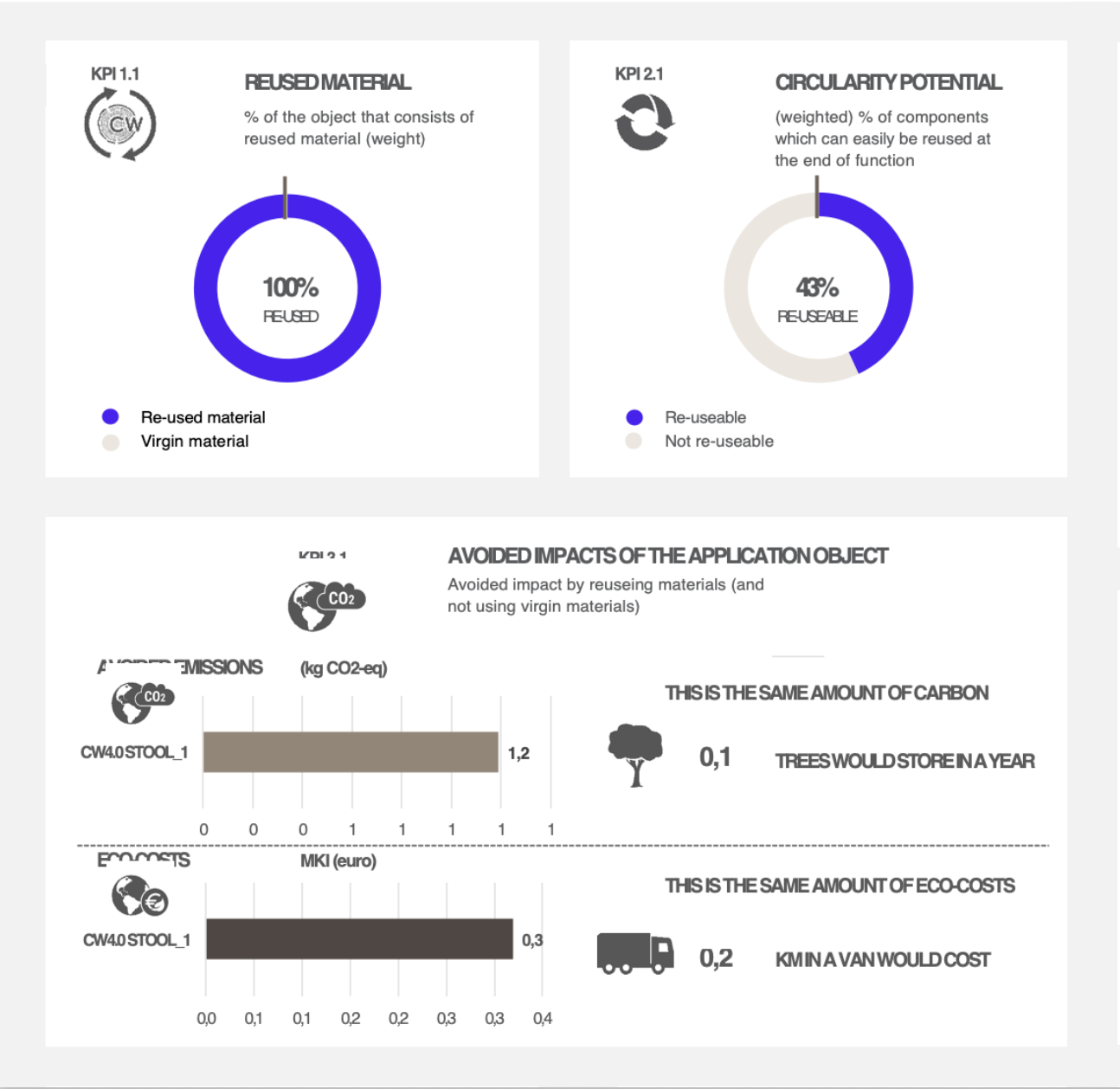
Many of these designs are part of larger research projects. For our partners, and for the research results of our projects it’s important to know the effects of design choices - like what material you use for a design’s components. Over the years we’ve developed our own KPI model to evaluate the impact of our designs – looking at aspects like disassembly, material re-use, carbon-saving, but also labor costs and energy use to make assessments of which design ideas are high-impact, and which might be less so.
Since we often use the same software to design and manufacture objects (Rhino3D + Grasshopper), we want to integrate this KPI calculation model into a custom (Python, or C#) plugin for our design software, which fits into our usual workflow.
The calculation model is worked out and tested – what we are looking for with this call is someone who can help us understand how we can best integrate this model into a robust workflow, and to design & build an implementation that can be used with students, staff and perhaps even with our industry partners to evaluate design choices. The plugin should not only evaluate the design of the object, but also evaluate the impact of robotic production, if modeled in the code, to deliver KPI impact data. The plugin should use background data from various sources needed to calculate impact.
This will involve:
- Gathering requirements for the user experience
- Understanding & mapping the computational design workflow in the Robot Lab
- Researching different approaches to integrate a calculation model into a plugin
- Developing a methodology to (manually) update background data (e.g. energy consumption of robotic milling), or load background data from external sources (e.g. the climate footprint of specific materials) into the KPI framework.
- (Most importantly) implementing the plugin
Deliverables
Impact evaluation plugin design and implementation.
User experience design and workflow research that informed the design.
Full documentation of all software features.
A manual detailing how to use the plugin for new users.
Required Knowledge & Skills
- Since Python is the default scripting language in the Robot Lab, knowledge of Python is required, C# is a plus but not required
- Affinity/experience with 3D modelling or graphics programming is a plus, but not required